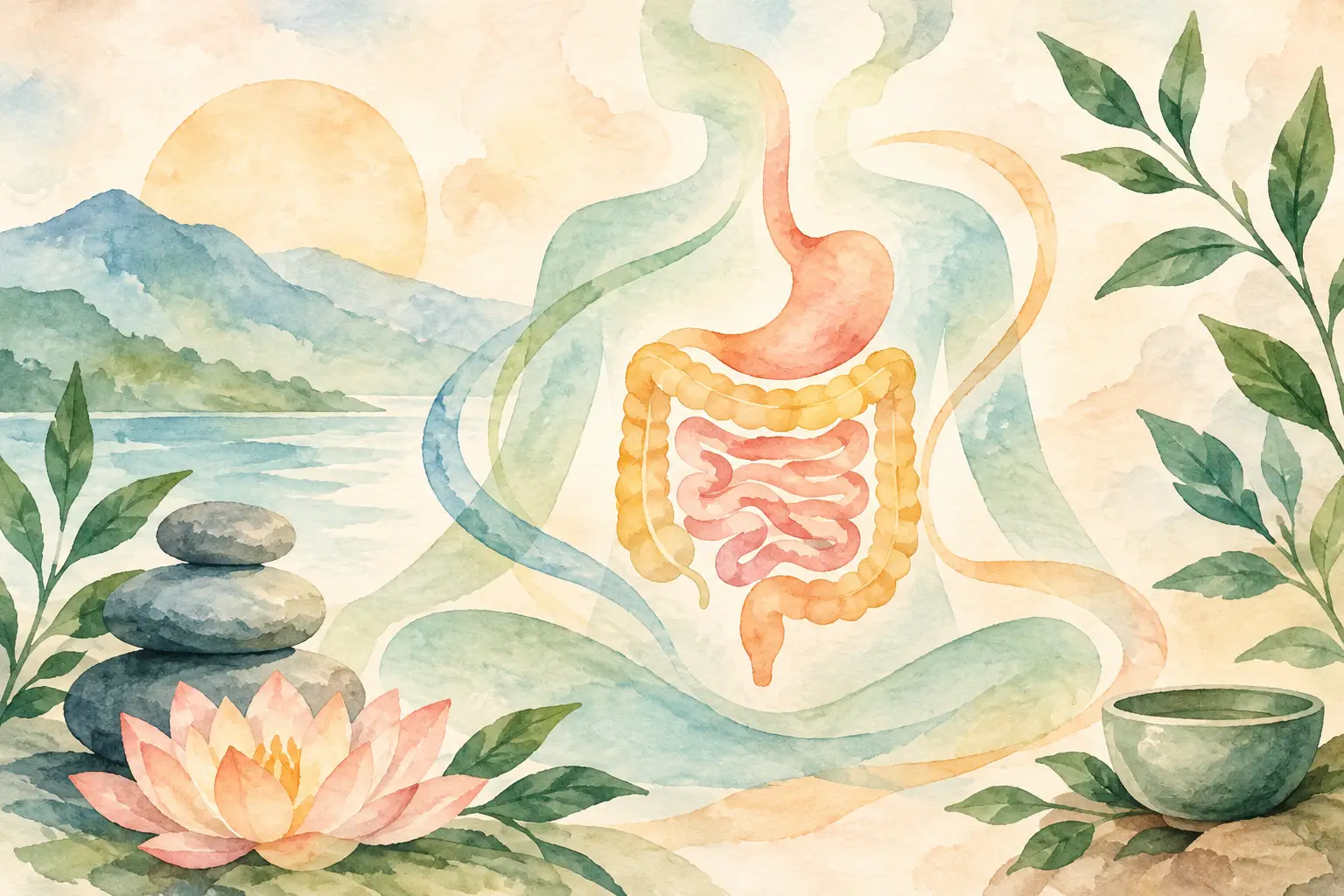
A meal can be ordinary, yet the aftermath can feel anything but: early fullness, swelling, reflux, nausea, cramping, constipation, urgent bowel movements, or a fatigue that asks for the rest of the day. For people living with hypermobility, these patterns are common enough to raise a fair question: does hypermobility affect digestion? It can. Not everyone with hypermobility develops digestive symptoms, and digestive symptoms always deserve their own careful assessment. Yet the connection is real for many people, particularly those with hypermobility spectrum disorder (HSD) or hypermobile Ehlers-Danlos syndrome (hEDS).
The useful starting point is not to treat the gut as a separate, faulty compartment. Digestion depends on connective tissue, coordinated muscle activity, blood flow, the autonomic nervous system, breathing, sleep, food tolerance, movement and a sense of safety. When several of these systems are under strain, the digestive system may become less predictable.
How hypermobility can affect digestion
Hypermobility describes joints that move beyond the usual range. In HSD and hEDS, differences in connective tissue may be more widespread than the joints alone. Connective tissue provides support throughout the body, including around the digestive tract and pelvic organs. This does not mean that loose connective tissue directly explains every gut symptom. The picture is more layered than that.
The gut has its own nervous system, but it is in constant conversation with the brain and autonomic nervous system. This is the system that adjusts heart rate, blood pressure, sweating and digestion without conscious effort. Many hypermobile people also experience symptoms of autonomic dysregulation, such as dizziness on standing, palpitations, temperature sensitivity or marked fatigue. When the body is working hard to maintain circulation and alertness, digestion may be slowed, disrupted or experienced more intensely.
Gut motility – the rhythmic movement that carries food through the digestive tract – can be affected by this regulation. Some people notice slow transit and constipation. Others experience rapid bowel movements, abdominal pain or alternating patterns. Reflux, nausea and a feeling of fullness after a small meal are also frequently reported. These symptoms overlap with common conditions such as irritable bowel syndrome, functional dyspepsia and gastro-oesophageal reflux disease, so a diagnosis should never be assumed from hypermobility alone.
Pain and persistent muscular effort can add another layer. A body that is constantly trying to create stability may hold through the abdomen, ribcage, diaphragm, neck and pelvic floor. Protective tension is understandable, especially after years of sprains, strain or feeling physically unreliable. But a braced trunk can alter breathing mechanics and the gentle pressure changes that normally support comfortable digestion.
The role of stress, breathing and the nervous system
Digestive symptoms are sometimes dismissed as “just stress”. That language is unhelpful. Symptoms are real, and stress is not a personal failure. A better understanding is that the digestive tract is highly responsive to the nervous system.
When the body perceives threat, overload, pain or urgency, it prioritises protection. Appetite may disappear, nausea may increase, and bowel habits may change. For someone managing joint pain, sensory sensitivity, poor sleep, work pressure and limited energy, this protective state can become familiar. The gut may then remain reactive even when there is no obvious danger.
Breath can be a gentle entry point. The diaphragm moves with every inhalation and exhalation, sharing an anatomical relationship with the ribs, upper abdomen and postural system. Restricted rib movement, shallow upper-chest breathing or habitual breath-holding can accompany pain and hypervigilance. They are not the sole cause of digestive trouble, but restoring more ease in the breath may support regulation as part of wider care.
This is why forceful “fixes” rarely suit a sensitive hypermobile system. The aim is not to make the abdomen relax on command. It is to help the whole system find a little more capacity: steadier pacing, less unnecessary bracing, more reliable rest and movement that builds confidence rather than exhaustion.
Common digestive patterns in hypermobility
There is no single hypermobile gut profile. One person may struggle mainly with constipation and bloating; another may have reflux and nausea; another may experience symptoms that fluctuate with hormonal changes, stress, illness or activity. Food intolerances can coexist, but it is wise not to remove wide categories of food without clinical guidance. Restrictive diets may reduce variety, increase anxiety around eating and make it harder to meet nutritional needs.
Some people with hEDS or HSD also live with pelvic floor symptoms, including difficulty fully emptying the bowel, pelvic pain or a sense of pressure. The pelvic floor needs both support and the ability to release. In a hypermobile body, it may be overworking to create stability rather than simply being “weak”. This distinction matters. Generic strengthening exercises can occasionally worsen tension or symptoms when they are not matched to the individual.
Medication can also influence the picture. Pain relief, iron supplements, some antidepressants and other prescribed treatments may affect appetite or bowel function. A clinician or pharmacist can help review this safely. It is worth bringing a full list of supplements as well as prescriptions, as “natural” does not automatically mean neutral for the gut.
When digestive symptoms need medical attention
Because digestive symptoms are common in hypermobility, it can be tempting to explain everything through that lens. Please do not let familiarity delay assessment. Speak with a GP or relevant medical professional if symptoms are persistent, changing, or affecting your ability to eat, work, sleep or maintain weight.
Urgent medical advice is particularly important for blood in the stool, black stools, vomiting blood, severe or escalating abdominal pain, persistent vomiting, fever, unexplained weight loss, difficulty swallowing, fainting, dehydration, or a new major change in bowel habit. These signs do not necessarily mean something serious, but they should be assessed promptly.
A thoughtful assessment may include discussion of bowel patterns, pain, reflux, menstrual or hormonal factors, fatigue, medication, hydration, nutrition and autonomic symptoms. Keeping a brief, non-judgemental record can be useful. Rather than tracking every mouthful, notice broad patterns: what symptoms occur, when they appear, sleep, stress load, movement, menstrual cycle and whether meals are rushed or calm. The purpose is curiosity, not control.
Gentle ways to support digestion with hypermobility
Support works best when it is sustainable. A perfect routine that costs all your energy is not therapeutic. For some people, smaller and more regular meals reduce the burden of large meals. For others, adequate fluids and gradual fibre changes are more relevant. Fibre can help constipation, but increasing it rapidly may worsen bloating or pain, particularly if motility is slow. Individual response matters.
Pacing is equally practical. Eating while rushing between meetings, standing because sitting is painful, or pushing through a meal when nauseous can reinforce strain. Where possible, create a few minutes of arrival before food: feel the feet supported, soften the jaw, let the exhalation lengthen without forcing it, and allow the shoulders to settle. This is not a cure for gastrointestinal disease. It is a small signal to the nervous system that the body has permission to receive nourishment.
Movement can support digestion too, provided it respects joint stability and fatigue limits. A short, easy walk after eating may feel better than an intense workout. Gentle spinal and ribcage mobility, balanced with strength and proprioceptive training, can help reduce the sense that the whole trunk must grip for security. The right dose is often less dramatic than expected.
Hands-on osteopathic care may be part of a wider support plan for some people. A careful practitioner can assess posture, rib and diaphragm movement, abdominal wall tension, pelvic and spinal mechanics, and the way pain or instability shapes breathing and movement. The aim is not to claim that manual therapy treats every digestive disorder. It is to support comfort, mobility and nervous-system regulation while medical and nutritional needs remain properly addressed.
At ZOLO, this work is approached with particular respect for sensitivity and variability. A session may include gentle manual treatment, movement re-education and attention to breath, proprioception and pacing. The pace matters. For a hypermobile person, more pressure or more exercise is not automatically better; a sense of safety and a clearer relationship with the body are often more useful foundations.
A steadier relationship with your body
Digestive symptoms can make the body feel unpredictable, especially when they sit alongside pain, fatigue or dizziness. It is understandable to search for one explanation and one decisive answer. Usually, the more helpful path is quieter: rule out what needs medical care, understand your patterns, and build support around the systems that are carrying too much.
Your gut is not separate from your joints, breath, energy or experience of stress. With patient assessment and gentle, individualised care, it is possible to make more room for comfort, nourishment and trust in the body again.